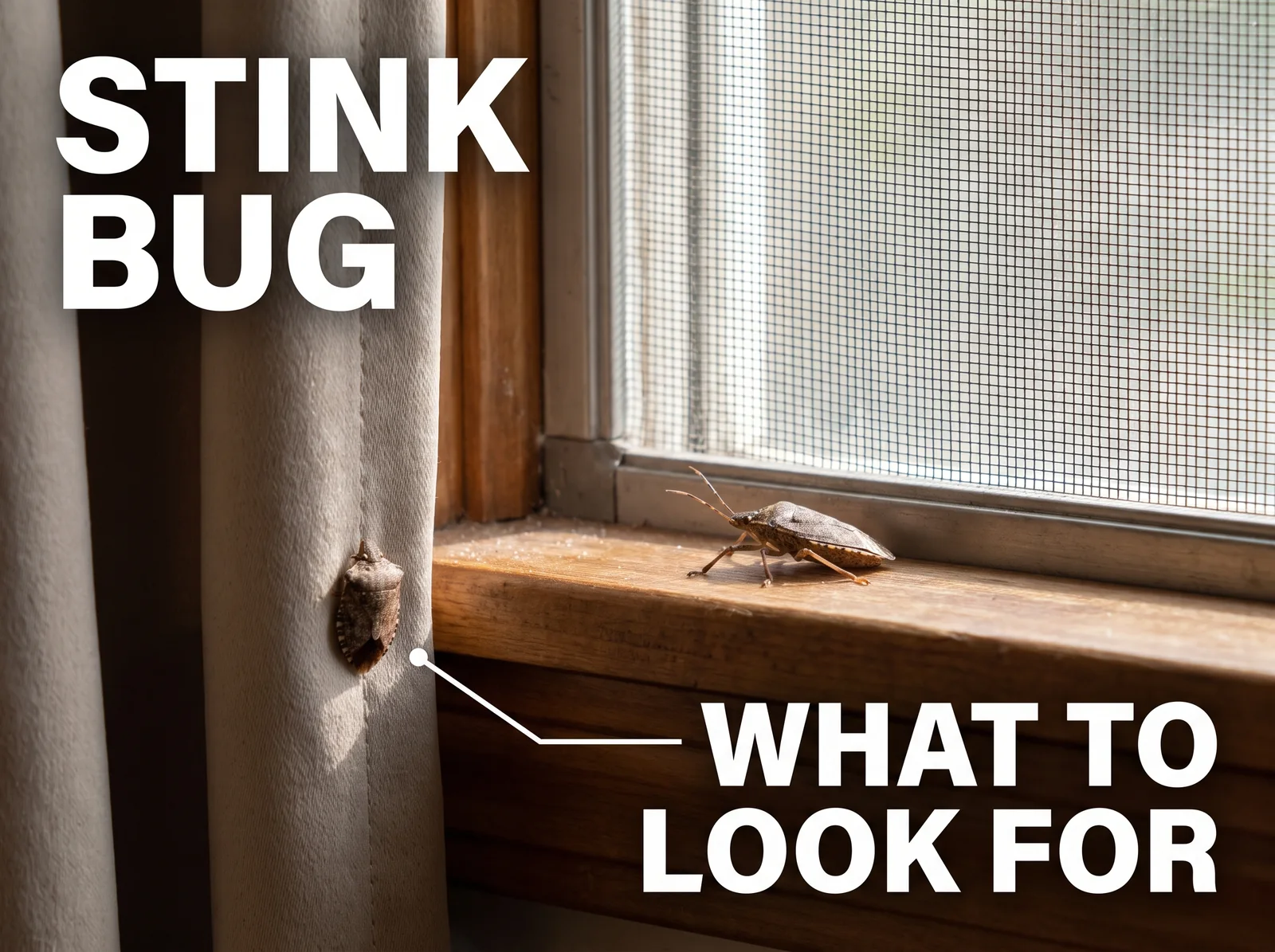
What should you do today if you find a stink bug?
One or two stink bugs on a windowsill isn't an emergency. Pick one up gently with a tissue or cup, or vacuum it up, and release or discard it outside. Don't squash it on fabric, carpet, or curtains, since the odor can linger and can stain light-colored surfaces.
If you're finding several in one day, spend ten minutes walking the perimeter of that room. Look at window frames, door thresholds, and any wall-mounted light fixtures. Stink bugs often cluster near whichever spot let them in.
Write down where you found each one, even just a quick note on your phone. That list becomes useful once you start the inspection step, because patterns in the sightings usually point straight to the entry point.
This first-day check is really the start of learning how to get rid of stink bug problems for good, instead of just removing them one at a time as they appear.
- Remove bugs with a tissue, cup, or vacuum — don't crush them
- Check nearby windows, doors, and light fixtures the same day
- Log the date and location of each sighting
How do you know it's actually a stink bug?
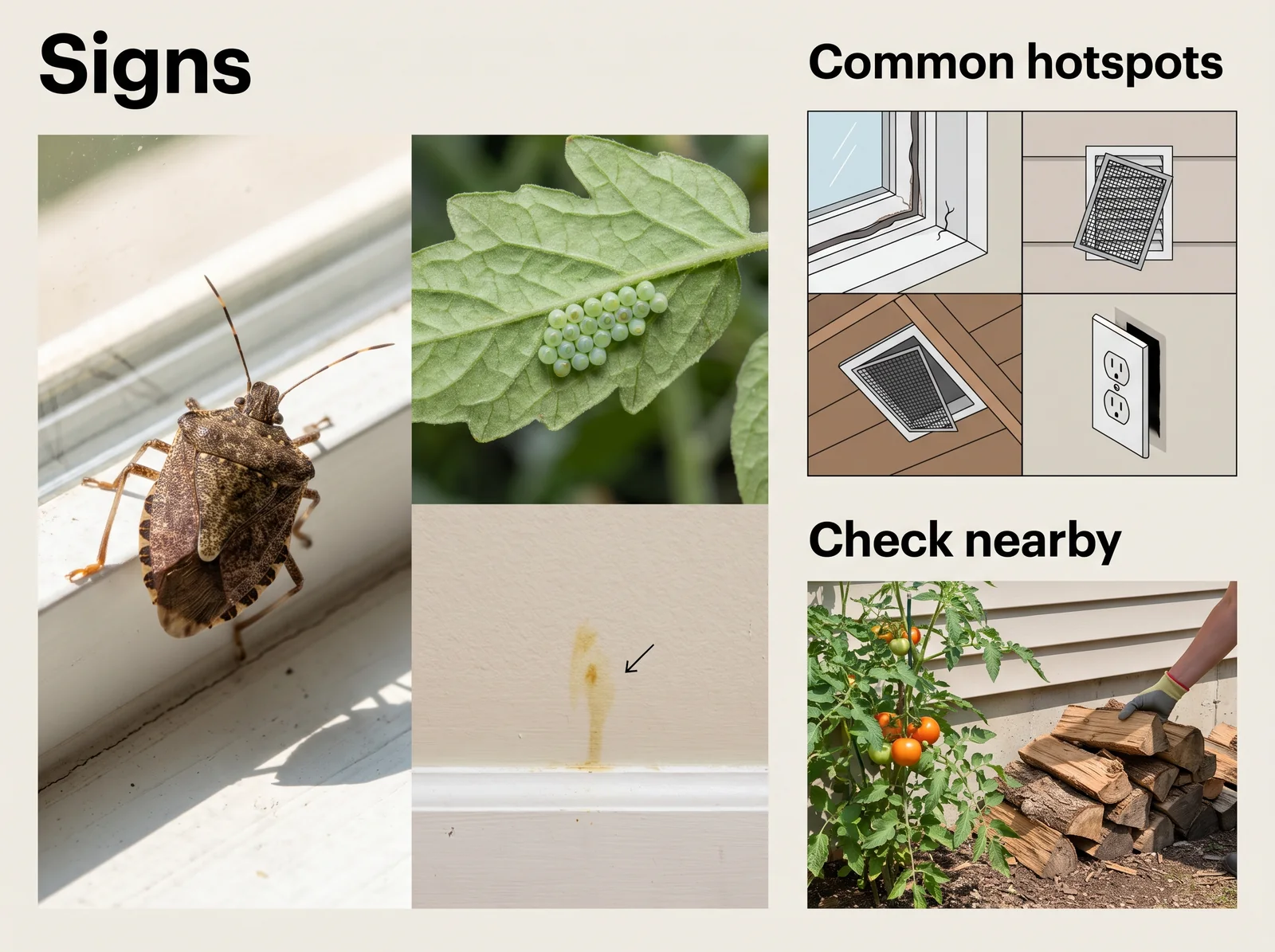
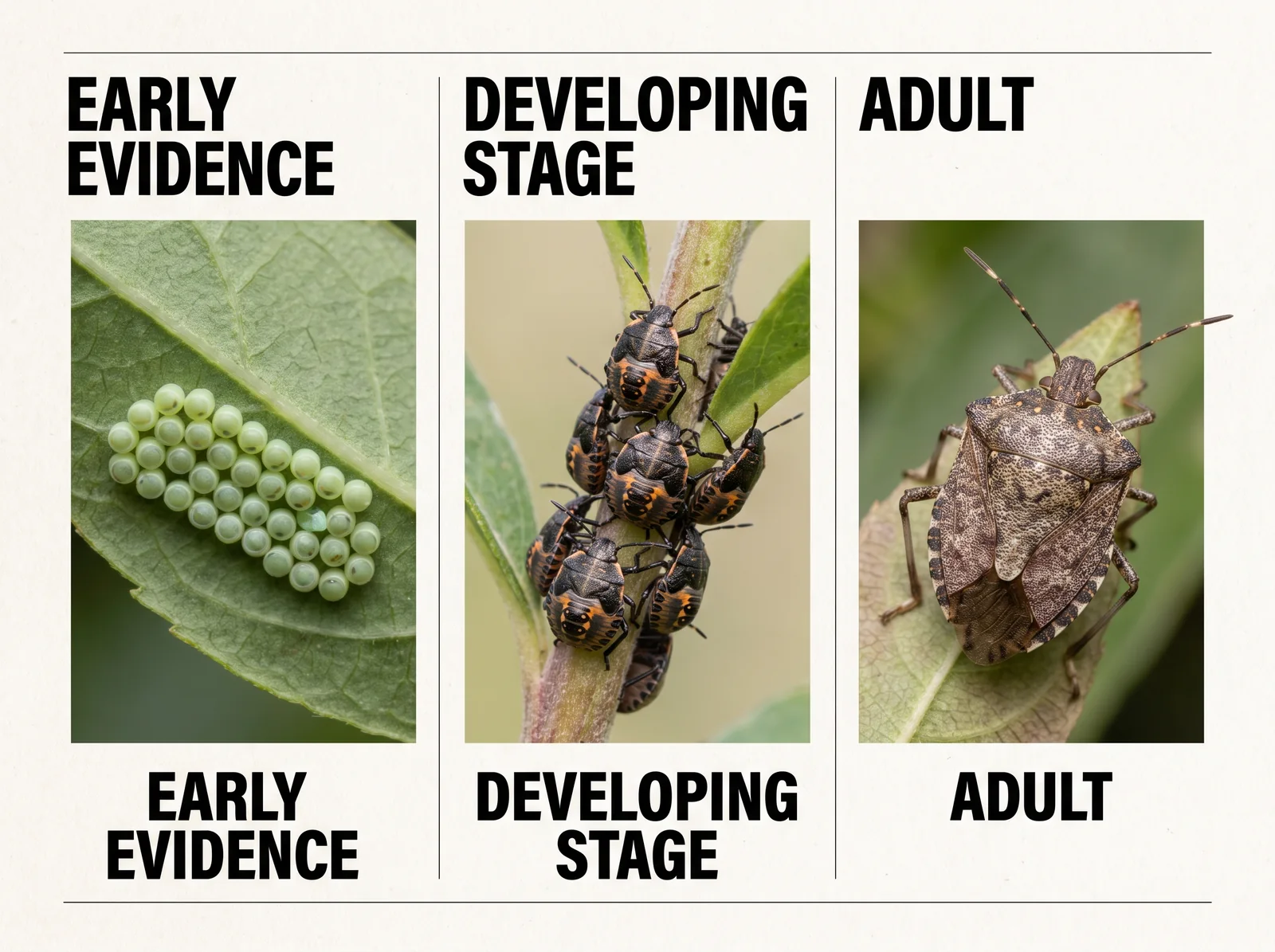
Before you spend time trying to get rid of stink bug activity, make sure that's what you're actually seeing. Stink bugs have a broad, shield-shaped body, usually mottled brown or gray, with short antennae that often show light and dark bands.
They're commonly confused with boxelder bugs, which are narrower and often show red or orange markings, and with leaf-footed bugs, which have a flatter, more elongated shape and a widened section near the back legs.
The clearest confirmation is behavior: if you disturb one and notice a sharp, unpleasant smell, that's a strong sign it's a stink bug rather than a look-alike. They're also more common on sun-warmed exterior walls in early fall.
If you're not sure, take a clear photo before you remove the insect. Comparing size, color pattern, and shape against a few reference images is the fastest way to confirm before you decide on any next step.
Where are stink bugs getting in?
Once you've confirmed the pest, the real work of finding the source starts outside. Walk the exterior of your home and check where siding meets trim, around window and door frames, and anywhere pipes, cables, or vents pass through the wall.
Stink bugs are drawn to sun-warmed surfaces, so south- and west-facing walls in early fall are worth extra attention. Look for small gaps you can slide a business card through — that's often enough space for them to squeeze in.
Inside, check attics, soffit vents, and the areas around recessed lighting, since these connect fairly directly to the outside. Window sills and sliding door tracks are common indoor gathering spots too.
Match what you find against the sighting log from your first-day check. If most of your indoor sightings cluster near one window or one wall, that's usually where the real gap is.
What's the best way to get rid of stink bug problems?
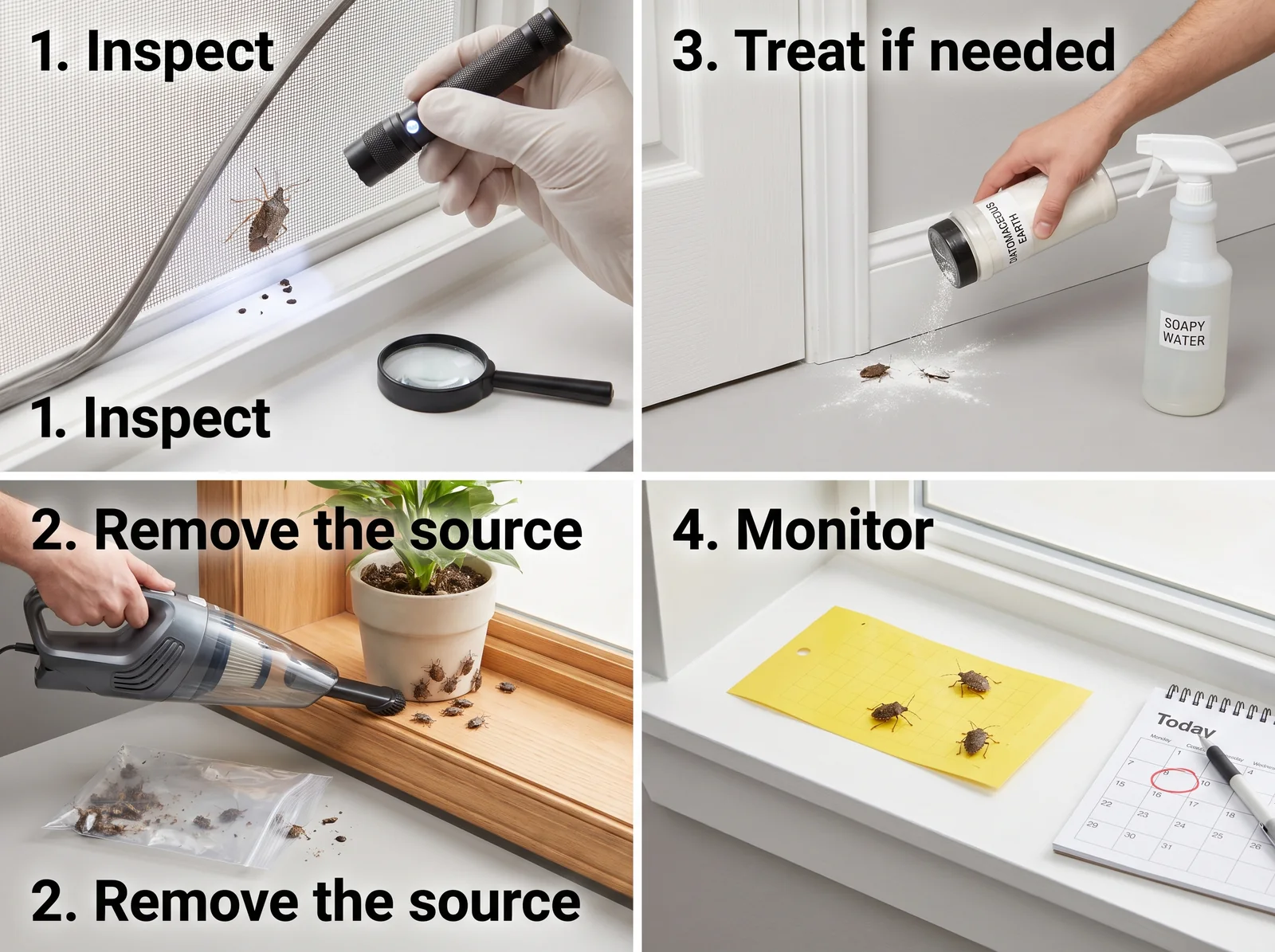
For bugs already inside, a vacuum with a disposable bag is the simplest option. Empty the bag outside right away so the smell doesn't stay in your home. A shop vac works well for larger numbers.
Soapy water in a shallow dish can work as a passive trap: stink bugs that fall in tend to sink and drown, and it doesn't involve any chemical product. Place it near a window where you've seen activity.
Sealing the entry points you found during inspection is what actually stops the cycle. Caulk gaps around trim, add weatherstripping to doors, and repair torn window screens. This step matters more for long-term results than any single removal method.
If you decide pesticide treatment is necessary, use only an EPA-registered product labeled for stink bugs and for the specific site you're treating, and follow the label completely. Skip homemade sprays or mixtures — they're not tested for safety or effectiveness.

How do you keep track of stink bug activity?
Monitoring tells you whether your sealing and removal work is actually holding. Check the same windows, doors, and vents you sealed once a week during early fall, when activity is highest.
A simple sticky trap or a light trap placed near a problem window can show you whether bugs are still finding a way in, without needing to check every room daily.
Keep using that sighting log. If new bugs show up in the same spot after you've sealed it, that gap probably needs a second look or a different sealing material.
Once sightings drop to zero for a couple of weeks, you can check less often, but it's worth a quick look again the following fall when they start seeking shelter again.
How do you keep stink bugs from coming back?
Prevention is mostly finishing the exclusion work you started. Caulk any remaining gaps around siding, trim, and utility penetrations, and make sure door sweeps sit tight against the threshold.
Check window and vent screens for tears or gaps and repair them before fall. Attic and soffit vents should have intact screening, since these are common indoor entry routes.
Outdoor lighting attracts stink bugs at night, so switching to motion-activated lights or keeping porch lights off when not needed can reduce how many end up near your doors and windows.
If you garden, stink bugs feed on many fruiting plants and can build up numbers nearby before moving toward the house. Keeping plants trimmed away from exterior walls reduces that bridge.
Are stink bugs dangerous to kids or pets?
Stink bugs don't bite, sting, or carry venom, so they're not a physical danger to children or pets. The main issue is the odor they release when disturbed or crushed, which some people find irritating to the nose or eyes at close range.
If a child handles one, washing hands afterward is enough. If a pet mouths or eats one, it's usually just an unpleasant taste rather than a toxic reaction, but call your vet if your pet seems unwell afterward.
If you do use any pesticide product around the home, keep children and pets away from treated areas exactly as the product label instructs, and store any product well out of reach.
When should you call a professional?
Most stink bug situations respond well to sealing and removal on your own. But if you're seeing large numbers year after year, or bugs seem to be coming from inside a wall or attic space rather than through obvious gaps, a licensed pest professional can pinpoint entry points you might miss.
It's also worth calling one if you're considering pesticide treatment and want it applied correctly and safely, since a licensed applicator can identify the right labeled product and application method for your situation.
If stink bug activity is tied to a larger structural issue, like damaged siding, gaps around a chimney, or a persistent moisture problem, a professional inspection can address the underlying cause rather than just the symptom.
Questions you may still have
Do stink bugs bite people?
No. Stink bugs have mouthparts built for piercing plants, not skin, and they don't have venom or stingers. The only real irritation comes from the strong odor they release when handled or crushed, which can bother eyes or nose at close range. If you're dealing with actual bites, a different pest is likely responsible, so confirming identification matters before treating anything.
Why do I suddenly have so many stink bugs indoors?
This is almost always seasonal. As outdoor temperatures drop in fall, stink bugs look for a warm, sheltered place to spend winter, and homes offer exactly that through small gaps around windows, doors, and siding. A sudden increase usually means an entry point nearby has opened up, so it's worth inspecting the closest exterior wall right away.
What happens if I squash a stink bug?
Squashing releases their defensive odor immediately, which can smell unpleasant and occasionally leave a faint stain on fabric or carpet. It doesn't cause any health risk, but it's not necessary either. Removing them live with a tissue, cup, or vacuum avoids the smell and the mess, and works just as well for getting them out of your space.
Do stink bugs damage homes or belongings?
Indoors, stink bugs don't chew wood, wiring, or fabric, so they don't cause structural or property damage. They're a nuisance and odor issue rather than a destructive one. Outdoors, though, they can damage garden plants and some fruit or vegetable crops by feeding on them, which is worth knowing if you're seeing large numbers near a garden bed.
How long will a stink bug problem last?
Indoor activity typically peaks in early-to-mid fall and tapers off through winter as remaining bugs settle into hiding spots or die off. Consistent sealing of entry points shortens this window noticeably, since fewer new bugs get in to replace the ones you remove. Without sealing, the same gaps tend to let bugs in again the following fall.